#FilterTheNoise
Media literacy for all. Content & workshops to navigate the news in a healthier way and reduce your screen time.
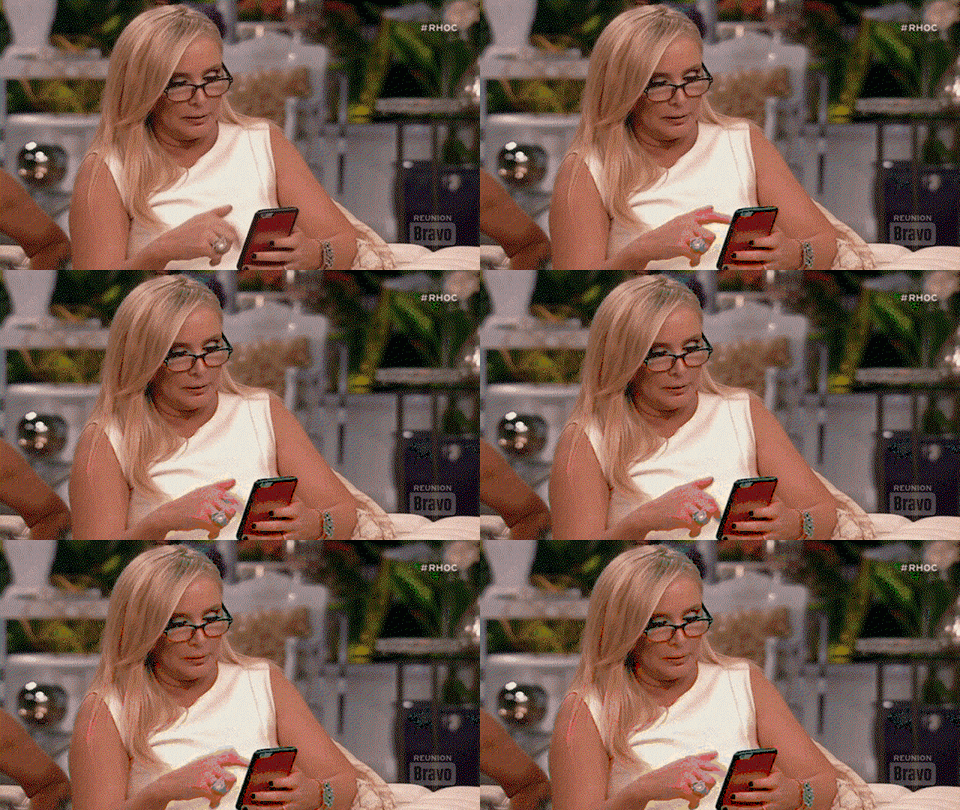
How many times a day do you unlock your smartphone?
20, 50, 100? There's a good chance you underestimate this number. This is not our fault, smartphones and apps have addictive features that keep us on and always coming back for more.Think about autoplay and infinite scroll, a couple of the more obvious addictive design choices present in.The good news is there are many steps you can take to curb the excesses.
How do you keep up-to-date with the news?
Our way of consuming the news is often superficial, made of clickbait headlines, breaking news and 20-second clips on social media that arouse emotion rather than inform.It is also overwhelmingly negative, the carousel of violence, catastrophes, crime and suffering leading to feelings of despair, anxiety and helplessness.Should we consume news in a healthier way?
Workshops
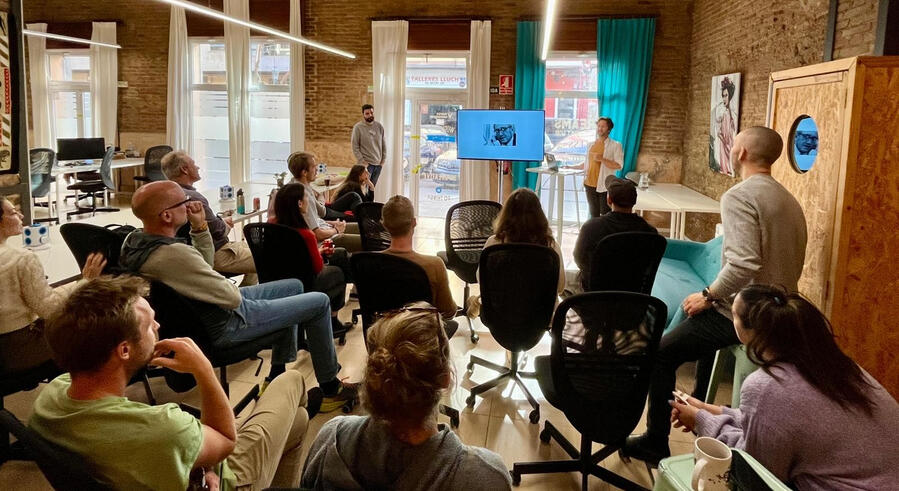
Interactive fun workshops on the topics of media literacy. Participants will develop their critical thinking and come away with a myriad of tips to apply to their professional and personal life.
Content
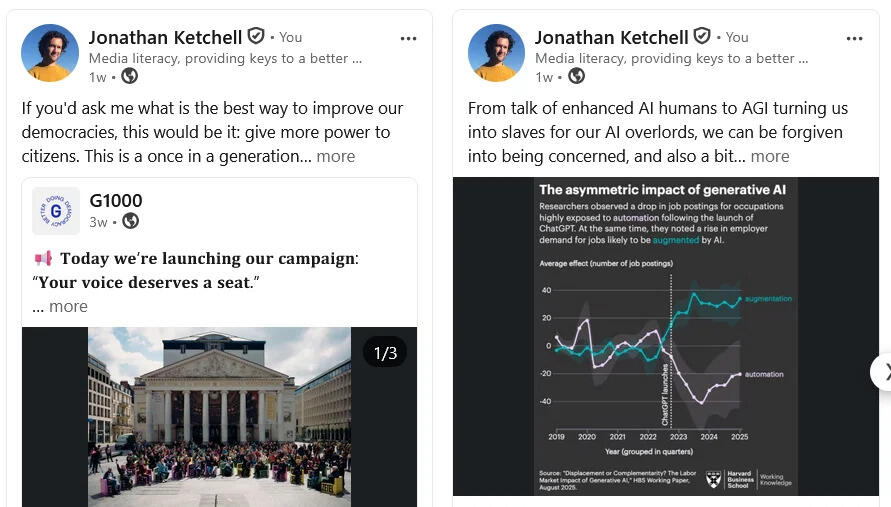
Explore free and engaging content in the media and political literacy fields.
Resources with nuance and depth that will challenge your thinking.
How #FilterTheNoise was born
When Covid-19 came around, affecting the very fabric of society, it was obvious how unequipped we were with dealing with the incessant flow of information on the web. We struggled to see what constituted a valid source...
Workshops
We set up engaging workshops in the field of media literacy, helping you navigate the news and alter your screen time habits.
Break the scroll: reclaim your time online
Learn about the patterns that make our smartphones and apps so addictive. Come away with an action plan to change habits and reduce unnecessary screentime.
Navigate the news in the age of clickbait
Learn how to consume the news in a "slower" way, away from the cycle of breaking news, negative headlines and social media superficiality.
We learn best by having fun!
Interactive talks on topics to foster your critical thinking
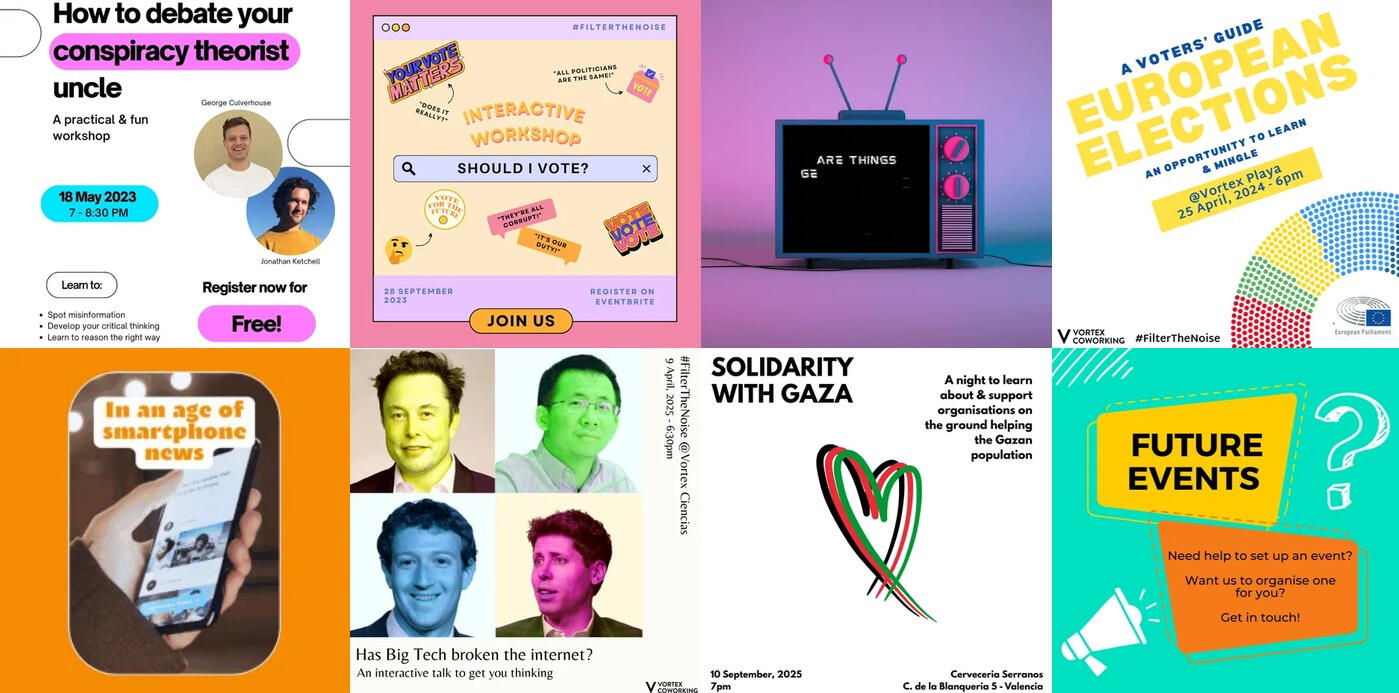
Wish to set up a workshop?
📧 Email us at [email protected]➡️ Reach out on LinkedIn
Content
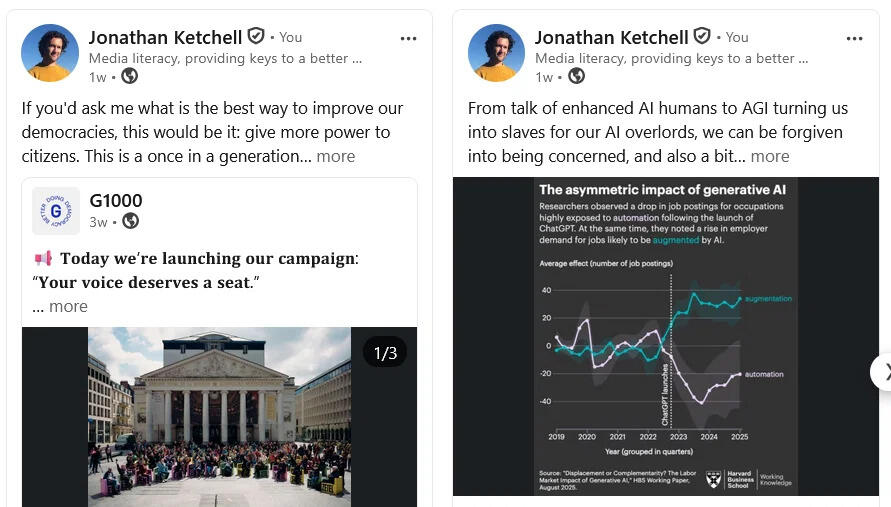
You'll find here a selection of videos, explainer slides, posts, educational resources & even a link to a podcast, many of these in the media and political literacy fields.
Follow me
📧 Any topics you want me to work on? Email [email protected]➡️ Reach out to me on LinkedIn where I regularly post.
ABOUT
How the project came about
#FilterTheNoise was born out of two events.First, the 2016 Brexit vote . With a French mother and British father, having benefited greatly from European integration, I watched with disbelief as the UK drifted away from mainland Europe. I set out to understand why, discovered a confused world of information, political manipulation, dark actors, powerful targeted ads and voter psychology.When Covid-19 came around, affecting the very fabric of society, it was obvious how unequipped we were with dealing with the incessant flow of information on the web. We struggled to see what constituted a valid source, failed to distinguish between fact and opinion, misunderstood the nature of scientific knowledge.
Misinformation and conspiracies grew, inflated by the emotions of our human nature, bots and an ad-driven model of the web.In the intertwined world of media and politics, these both events laid bare our inability to rewire our critical thinking. This had direct consequences for society, citizens unable to filter the information thrown at them and take the best course of action.➡️ A few years ago, I started creating learning resources for students and teachers on the topic of media literacy, providing the basics on how to search, assess and source information online, but also covering important topics such as online bullying or net neutrality. These acted as the basis from which #FilterTheNoise was born.
Reach out
📧 Email [email protected]➡️ Contact me on LinkedIn